

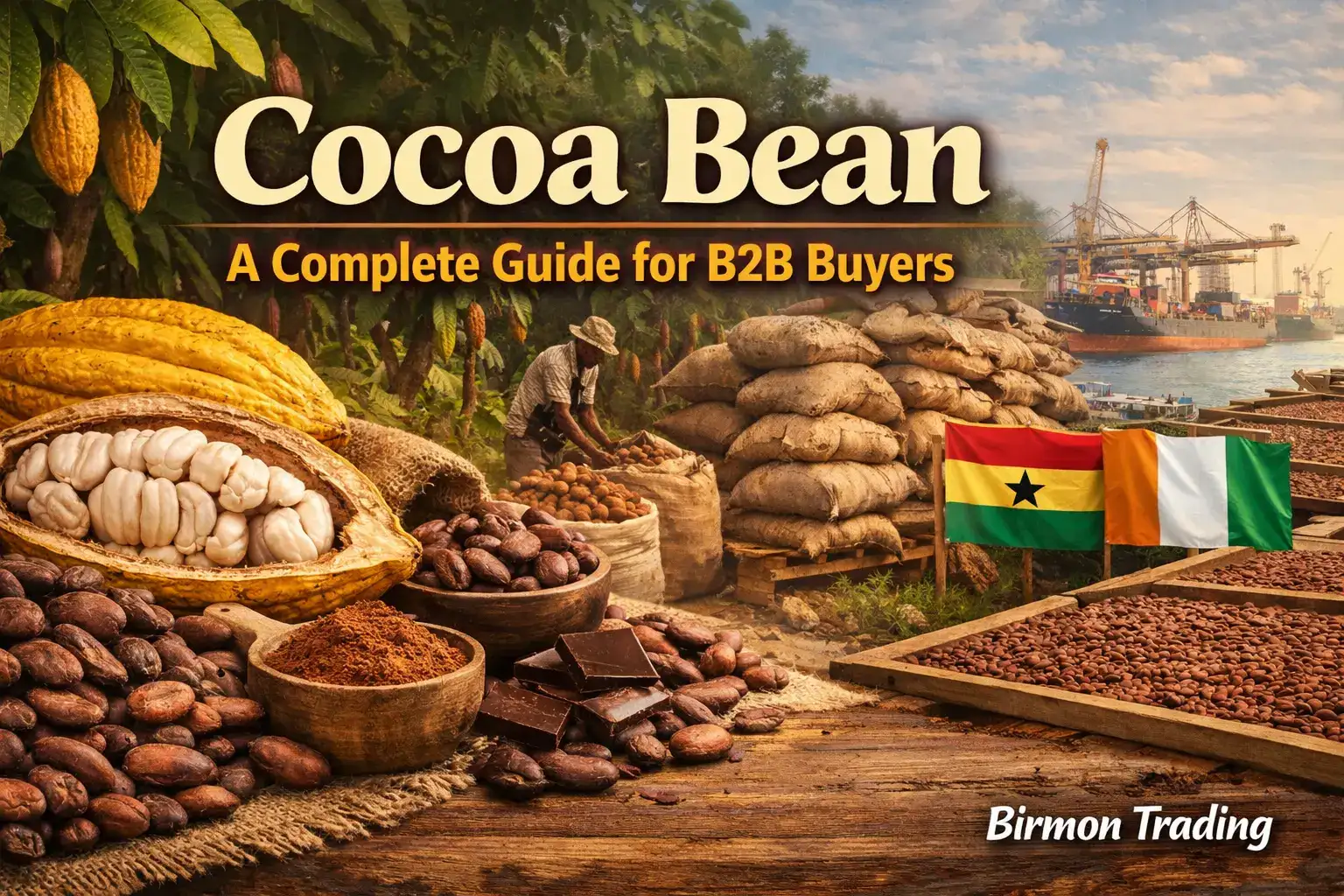
If you want to buy cocoa beans in large amounts, you need to know exactly what makes a good bean. The global chocolate market depends on the seeds of the Theobroma cacao tree. These seeds grow inside large pods in tropical countries near the equator. For a business buyer, choosing the right cocoa bean is the most important step for making high-quality chocolate or cocoa butter. This guide explains everything a buyer needs to look for before placing an order. We talk about the four main types of beans, which are Forastero, Criollo, Trinitario, and Nacional. You will also learn about the history of cocoa, how farmers grow it, and how the drying process changes the flavor. We look at the top countries that export cocoa like Ivory Coast and Ghana. By the end of this article, you will know how to check bean quality and how to find the best suppliers on B2B platforms.
Cocoa beans are the most important part of the chocolate industry. Scientists call the tree Theobroma cacao. The name actually means "food of the gods" in the Greek language. These beans are not really beans like the ones you eat in a salad. They are actually the seeds of the cacao fruit.
The fruit of the cacao tree is a large pod. Each pod holds about 30 to 50 seeds. These seeds are very bitter when the farmer first picks them. They do not taste like chocolate at all in the beginning. To get that chocolate flavor, the seeds must go through a long journey. First, workers open the pods and take out the seeds. Then, they put the seeds under banana leaves or in wooden boxes. This part is called fermentation. After that, the seeds sit in the sun to dry. Once they are dry, we call them cocoa beans.
For a B2B buyer, these beans are a raw commodity. You can process them into cocoa liquor, cocoa butter, or cocoa powder. Most buyers look for specific details like the fat content and the moisture level. If the moisture is too high, the beans might grow mold during shipping. This is why professional buyers always check the quality before they pay.
The history of cocoa started a very long time ago in the rainforests of South America. Many people think it started in Africa, but the roots are actually in the Amazon Basin. Thousands of years ago, people in the Amazon discovered that the seeds inside the cacao fruit were special.
The Maya and the Aztec people were the first to make cocoa a part of their daily lives. They lived in Central America and Mexico. These people did not make solid chocolate bars like we have today. Instead, they crushed the beans into a paste. They mixed this paste with water, chili peppers, and cornmeal to make a spicy, frothy drink.
The Aztecs thought cocoa beans were a gift from a god named Quetzalcoatl. Because the beans were so hard to grow, they became a type of money. People used cocoa beans to pay for clothes, food, and even taxes to their kings. For example, a small rabbit might cost ten beans, and a slave could cost one hundred beans.
In the 1500s, Spanish explorers came to the Americas. They saw the Aztecs drinking this dark liquid and decided to take the beans back to Europe. At first, the Europeans did not like the bitter taste. However, when they added sugar and milk, the drink became very popular among rich people.
For a long time, only the wealthy could afford cocoa. In the 1800s, new machines were invented that could press the fat out of the beans. This fat is what we call cocoa butter. This invention made it possible to create solid chocolate bars. Soon, the demand for cocoa became so big that farmers started planting trees in Africa and Asia. This created the global trade network that B2B buyers use today.
The world of chocolate starts with four primary types of cocoa beans. These are Forastero, Criollo, Trinitario, and Nacional. Forastero is the most common bean and provides the bulk of the global supply for mass-market products. Criollo is a very rare and expensive variety that offers a delicate and sweet flavor. Trinitario is a strong hybrid that combines the best parts of both beans. Finally, Nacional is a rare treasure from Ecuador known for its unique floral smell. Each bean plays a specific role in the B2B supply chain based on its flavor and price.
If you are a business buyer, you need to know the technical details of these varieties before you place a bulk order. Different beans change the quality and the cost of your final chocolate products. You can learn more about the market share, genetic clusters, and industrial uses of each variety in our full report. This information will help you choose the right supplier for your specific manufacturing needs.
Getting a raw farm product from a small growing region to a factory on the other side of the worl
READ FULLGlobal trade runs on a small group of raw farm products that show up in almost every industry. Th
READ FULLEvery day, farms around the world grow raw goods that feed major industries. These raw goods are
READ FULL