

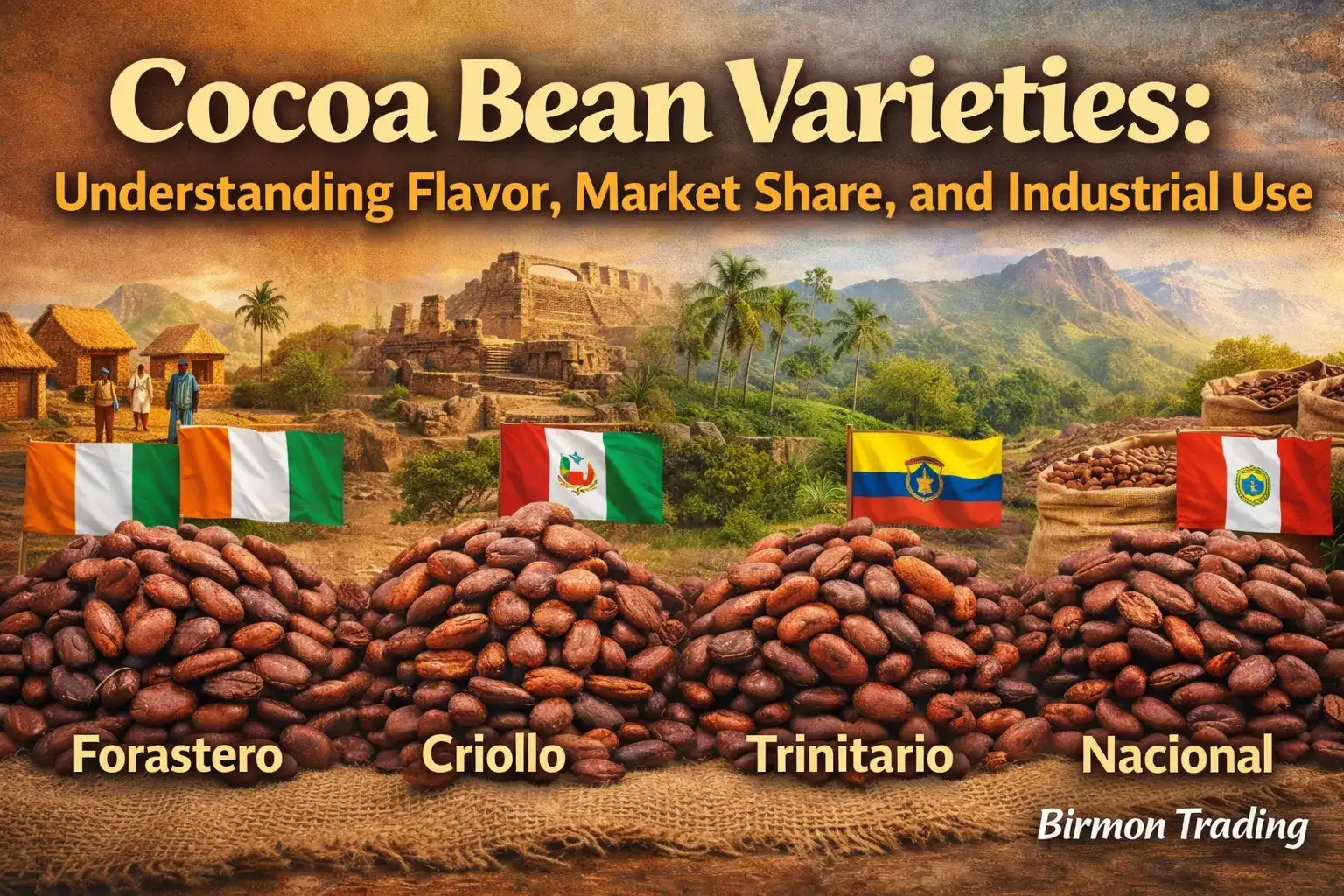
The world of cocoa is very diverse. Even though all cocoa beans comes from the same species of tree, the trees have changed over time. Today, the global market divides these beans into four main categories. These are Forastero, Criollo, Trinitario, and Nacional. Each type has its own DNA and its own special flavor. Some beans are easy to grow in large amounts, while others are very rare and expensive.
For a B2B buyer, knowing these types is the most important part of the business. The type of bean you buy will decide the taste, the quality, and the final price of your chocolate products. In this section, we will look at each type and how industries use them today.
If you are new to cocoa sourcing, we recommend reading our complete Cocoa Bean Guide for B2B Buyers to understand origin, quality standards, drying methods, and global suppliers before choosing a specific variety.
Forastero is the most common cocoa bean in the world. It makes up about 80% to 85% of all the cocoa grown on Earth. If you buy a standard chocolate bar from a grocery store, it is almost certainly made from Forastero beans.
Criollo is the king of fine chocolate. It is very hard to find because it only makes up 1% to 5% of the global market.
Trinitario is a natural hybrid bean. It combines the strength of Forastero with the high quality of Criollo. It holds about 10% of the total market share.
Nacional is a very unique variety. For a long time, people thought it was gone forever. It is extremely rare and only grows in very specific spots.
In the modern B2B market, we use more than just these four names. New science has created even more categories for buyers to understand.
CCN-51 is a modern bean made by humans in the 1960s. The name stands for Colección Castro Naranjal. It is famous because it produces a huge amount of cocoa. It is very profitable for farmers because the trees do not get sick easily. However, many experts think the flavor is too acidic. Usually, a factory has to process these beans a lot to make them taste good.
In 2008, a major study changed how we see cocoa. Instead of just four types, scientists now see 10 main genetic groups. These groups include:
|
Bean Type |
Market Share |
Key Flavor |
Primary Origin |
Best Use |
|
Forastero |
85% |
Bitter, Earthy |
West Africa |
Mass Market Bars |
|
Criollo |
1-5% |
Sweet, Nutty |
South America |
Luxury Chocolate |
|
Trinitario |
10% |
Floral, Fruity |
Caribbean |
Dark Chocolate |
|
Nacional |
Rare |
Jasmine, Citrus |
Ecuador / Peru |
Gourmet Crafts |
In this guide, we looked at the complex world of cocoa beans and their four main types. We now know that Forastero is the backbone of the global industry. It provides the large volume needed for the world's chocolate supply. Criollo represents the luxury side of the market because it has a delicate flavor and is hard to find. Trinitario is a reliable hybrid that offers both quality and strength. Finally, Nacional remains the rarest treasure for buyers who want a unique floral experience.
Every bean has a specific role in the B2B supply chain. A buyer must choose a bean based on who will eat the final product. Forastero is great for baking, cocoa powder, and affordable snacks. Criollo and Trinitario are better for dark chocolate lovers who care about the smell and aroma. Modern hybrids like CCN-51 show us how we can grow more cocoa to meet global demand. By understanding the genetics, the origin, and the flavor of these beans, businesses can make better buying decisions. This knowledge helps the chocolate industry stay strong and grow for years to come.
Getting a raw farm product from a small growing region to a factory on the other side of the worl
READ FULLGlobal trade runs on a small group of raw farm products that show up in almost every industry. Th
READ FULLEvery day, farms around the world grow raw goods that feed major industries. These raw goods are
READ FULL