
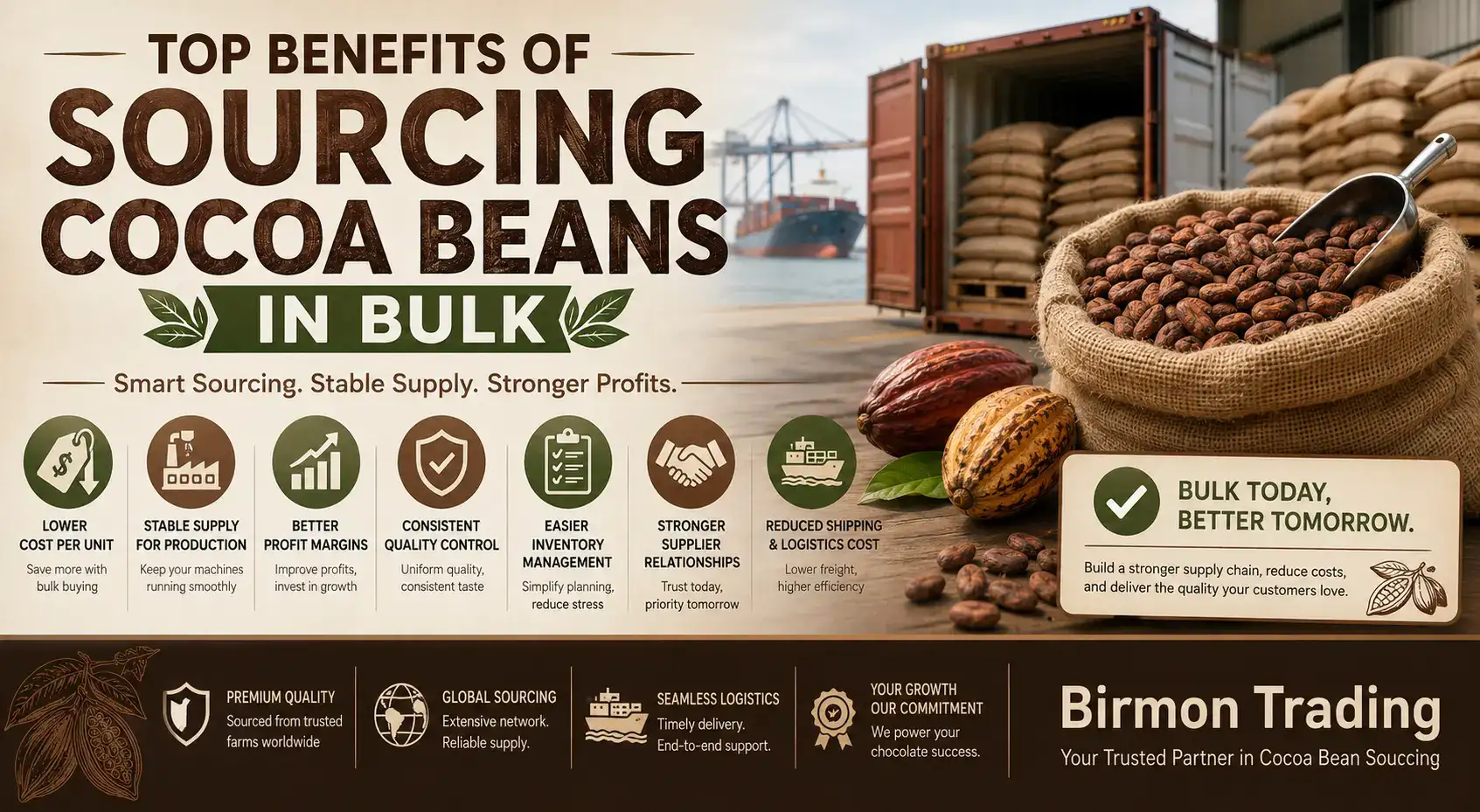
When chocolate factories and food businesses need raw materials, they look for ways to keep their supply chain smooth. One of the best ways to do this is to buy raw materials in large quantities. For businesses that make chocolate products, sourcing premium wholesale cocoa beans is a smart business choice that changes how they operate. This choice helps companies save money on every shipment and keeps their machines running without stopping. Food production needs a steady flow of high-quality ingredients, and getting them from the right source makes a big difference.
Buying large amounts of these pods and seeds from farms and distributors helps companies plan their budgets better. It gives businesses control over their production schedules and helps them meet the demands of their customers. When a factory has a constant stock of raw materials, it does not have to worry about missing deadlines or running out of stock. This practice forms the base of successful food manufacturing worldwide, especially in the confectionery industry.
Many global buyers choose this large-scale method because it protects them from market changes. The prices of agricultural goods change often because of weather, shipping problems, and farm conditions. By making large purchases, a business secures its inventory at a set price, which makes future planning much easier. This initial step in the supply chain sets the tone for everything else, from production efficiency to final sales.
Buying raw materials in large quantities is a proven way to reduce expenses for food manufacturers. When a factory buys wholesale cocoa beans, the cost for each kilogram drops significantly compared to small, frequent purchases. This happens because commercial farms and trade distributors offer discounts to buyers who purchase large volumes at one time. Lower production costs start right at the farm level when large orders are processed together.
Processing facilities and farms spend less money on packaging, labor, and handling when they sell in large amounts. Instead of packing hundreds of small bags, they pack large containers, which saves time and money. The supplier then passes these savings directly to the business buyer through a lower base price per ton. This price drop helps businesses spend less money on their raw materials from the very beginning.
In the global trade market, the price per kilogram is the most important metric for any purchasing manager. Small orders always carry a premium price because they require more work and resources from the seller. Large-scale purchasing removes these extra costs, allowing the buyer to get the raw ingredients at the lowest possible trade price. This cost efficiency is the main reason why large chocolate brands prefer big shipments.
A smooth manufacturing process requires a steady and reliable flow of raw ingredients into the factory. Purchasing large volumes keeps a continuous availability of cocoa beans for processing, roasting, and manufacturing without any sudden stops. Factories cannot afford to turn off their machines because they ran out of seeds to grind into chocolate liquor. A large stock in the warehouse acts as a safety buffer against unexpected trade delays.
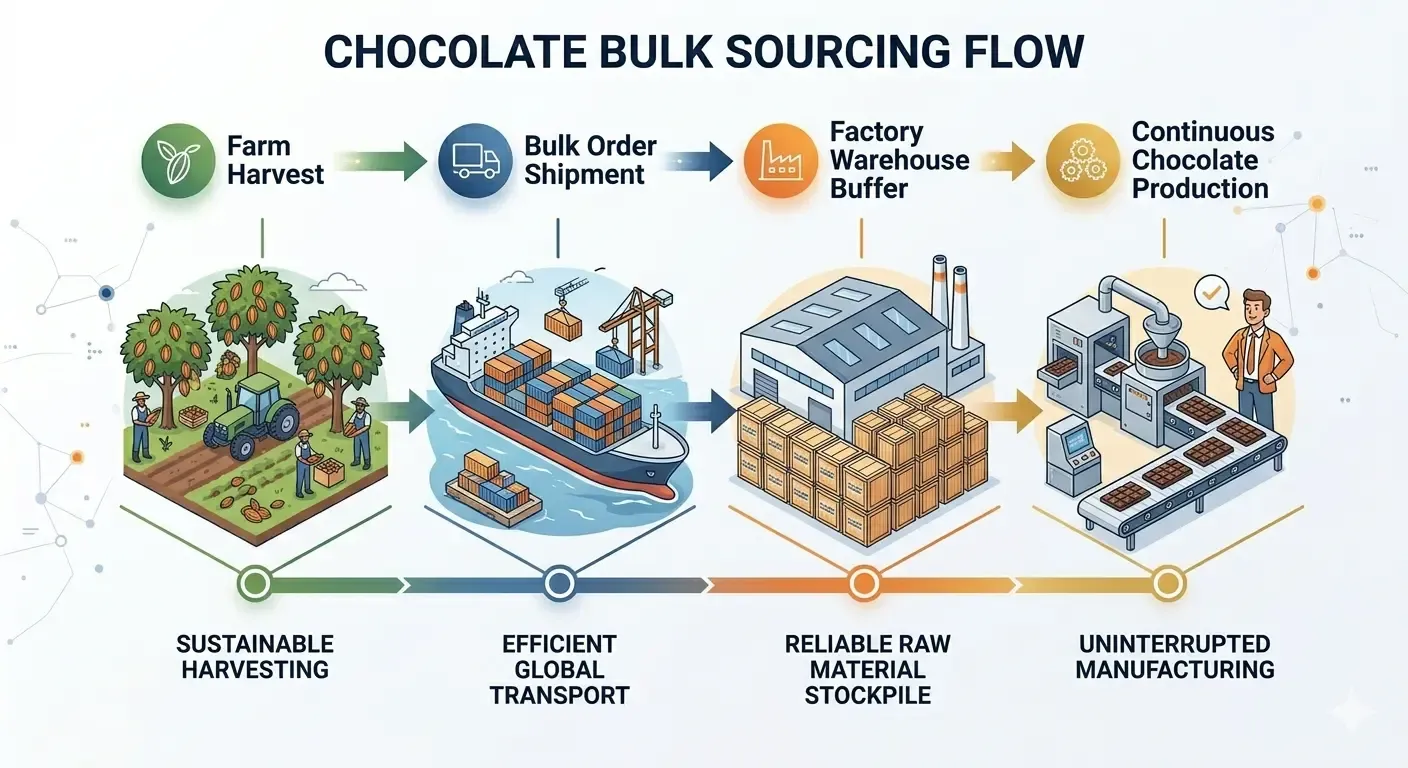
Supply chains face many challenges, such as bad weather in growing regions, port delays, and shipping container shortages. If a factory relies on weekly shipments, a single delay at the port can stop the entire production line for days. This stoppage causes workers to sit idle, delays customer orders, and wastes factory energy. Having a large inventory means the factory keeps working even if a shipment is late by two weeks.
Furthermore, agricultural harvests are seasonal, meaning crops are gathered only at specific times of the year. Bulk buyers purchase large stocks during the peak harvest season when the crop is fresh and plentiful. This strategy guarantees that the production line has the exact same type of raw material throughout the entire year. It removes the stress of searching for raw materials during the low-season months when goods are scarce.
The money a business saves on raw ingredients directly affects its final financial health and success. A lower procurement cost directly improves resale and production margins for every chocolate bar or powder box sold. When the cost of goods sold drops, the difference between the production cost and the retail price becomes wider. This extra room gives businesses more financial freedom and higher profits.
Higher profit margins allow a company to invest more money back into its own growth and development. Businesses can use these extra funds to buy better machinery, hire expert workers, or design better packaging for customers. It also gives the business a safety cushion if other costs, like factory electricity or worker wages, go up. The company can keep its retail prices stable for consumers because its raw material costs are low.
In competitive markets, having better margins also gives a business the power to adjust its pricing strategy. If a company gets its raw materials at a low price, it can offer discounts to wholesale customers to win big contracts. It can beat competitors on price while still making a good profit on every sale. This financial advantage starts completely with the choices made during the initial sourcing phase.
The taste of chocolate depends heavily on the quality, fermentation, and roast of the bean used in the recipe. Buying in bulk from the same supplier helps maintain uniform quality across thousands of product batches. When a factory changes its source frequently, the taste, oil content, and moisture level of the ingredients change too. This variation makes it hard to create a product that always tastes the same for consumers.
|
Sourcing Method |
Impact on Product Quality |
|
Small, Mixed Purchases |
Varies in taste, moisture, oil |
|
Large Single-Batch Sourcing |
Uniform fermentation and flavor |
A large shipment usually comes from the same harvest, the same region, and the same fermentation setup. This means all the seeds in that shipment share the same characteristics, flavor profile, and moisture levels. The factory workers can set their roasting machines to one exact temperature and time setting for the whole batch. This consistency ensures that every chocolate bar tastes exactly like the previous one, building customer loyalty.
Customers expect their favorite food products to taste exactly the same every time they buy them from a store. If a brand changes its recipe or flavor by accident, customers notice quickly and might switch to another brand. Large-scale sourcing provides the strict quality control that modern food safety and brand standards demand. It allows quality assurance teams to test one big batch instead of testing dozens of small, different lots.
Managing a warehouse is much easier when a business deals with fewer, larger shipments instead of many small ones. Large shipments reduce frequent ordering and simplify stock planning for the logistics team. Instead of making purchasing deals every single week, the team handles a few large transactions a year. This reduces paperwork, cuts down on administrative mistakes, and saves valuable office time.
Receiving goods at a factory warehouse requires a lot of labor, inspection time, and data entry work. Every time a truck arrives, workers must check the paperwork, inspect the goods, and move them to storage. By reducing the number of delivery trucks, the warehouse staff can focus on other important daily tasks. It creates a predictable schedule where the team knows exactly when a big shipment is coming and can prepare for it.
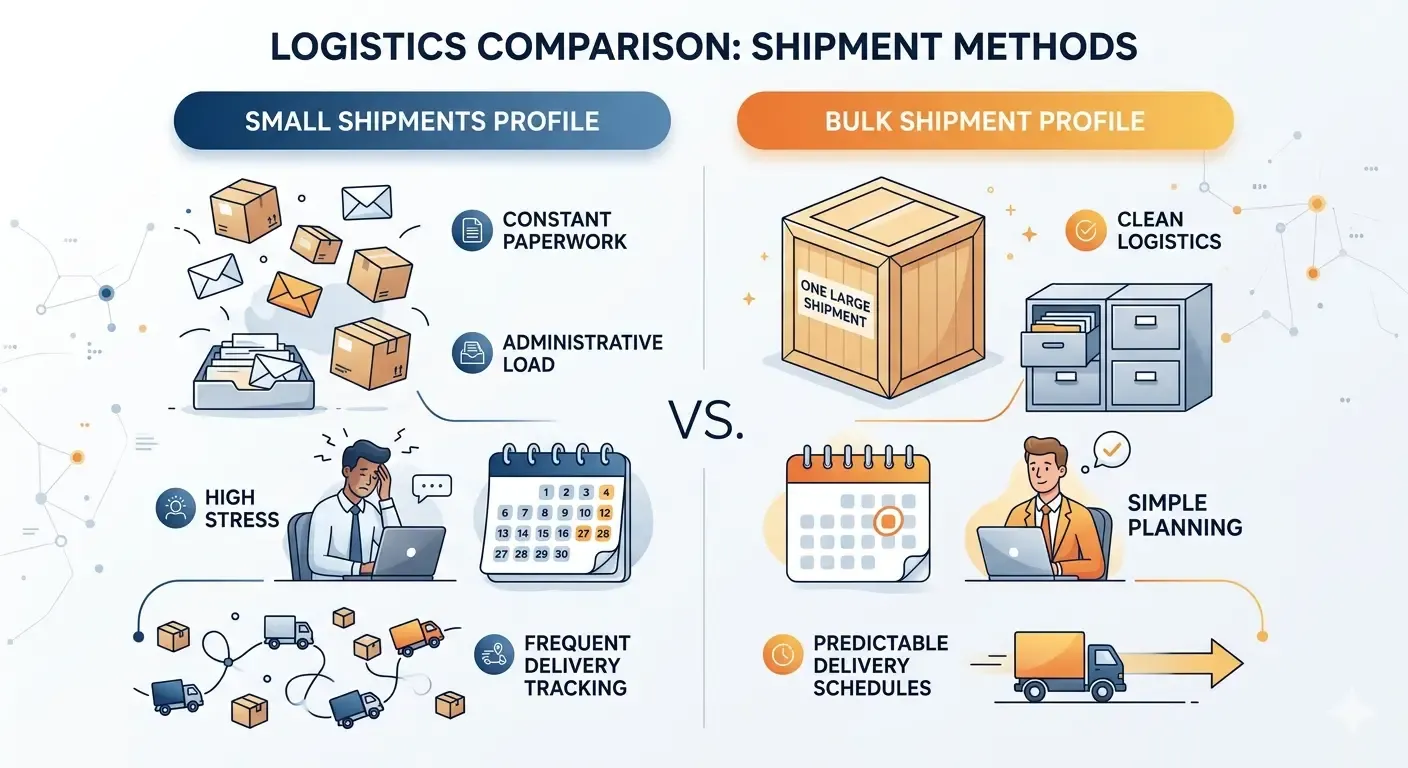
Predictable inventory levels also help managers calculate their exact storage space and usage rates with high accuracy. They can see exactly how many months of stock they have left just by looking at the warehouse rows. This clarity prevents overstocking situations where goods take up too much space or expire before use. It transforms warehouse management from a daily guessing game into an organized, long-term system.
Success in international trade depends heavily on the human connections and trust built between businesses. Bulk orders improve negotiation power and long-term supplier trust between the food brand and the producer. When a company places large orders, the seller views them as a premium, valuable business partner. Suppliers always work harder to protect and satisfy customers who bring them large, consistent revenue.
This strong relationship gives the buyer a big advantage when market conditions become difficult or unpredictable. For example, if there is a global shortage of crops, a trusted cocoa beans supplier will serve their largest bulk buyers first. Small buyers often get their orders canceled or delayed because suppliers prioritize their primary partners. Being a big customer means your business gets priority treatment during difficult times.
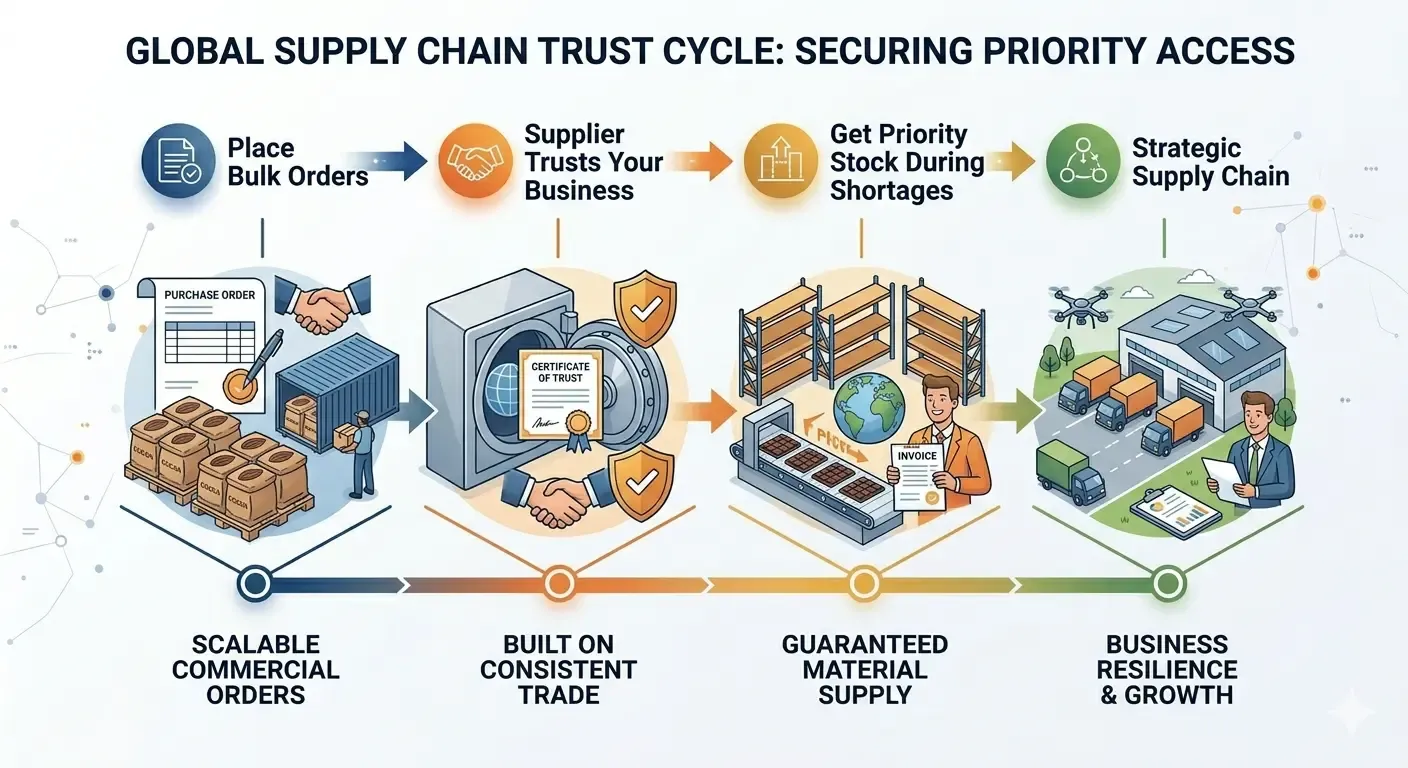
Good relationships also open the door to better payment terms, faster shipping options, and custom product choices. A trusted supplier might allow a long-term partner to pay for goods over thirty or sixty days instead of demanding cash upfront. They might also share inside market information about future crop prices, helping the buyer make smart choices. These benefits are only available to companies that show commitment through substantial, professional purchases.
Moving agricultural products across oceans and borders involves complex logistics and high transportation fees. Fewer shipments mean lower overall transportation and handling expenses for the purchasing company. Shipping one full container is much cheaper per kilogram than shipping ten half-empty boxes at different times. Freight forwarders and sea shipping lines offer much lower rates for full container loads.
|
Freight Method |
Logistics Efficiency |
|
Less than Container Load (LCL) |
High handling, more fees, slow |
|
Full Container Load (FCL) |
Low handling, cheapest per kg |
Small shipments require extra handling at ports because workers must mix different orders together in one space. This extra handling increases the risk of product damage, moisture exposure, and loss during transit. Large shipments go directly into a single container at the source and stay sealed until they reach the factory. This direct route cuts down port handling fees, customs paperwork costs, and local delivery charges.
By streamlining the shipping process, companies also reduce the fuel and energy used for transport. This efficiency lowers the carbon footprint of the supply chain, which matches modern environmental goals. Fewer truck trips from the port to the warehouse mean lower fuel surcharges and less strain on logistics staff. Every dollar saved on shipping stays in the business, increasing the overall cost efficiency of the trade operation.
Sourcing agricultural raw materials in large quantities provides a clear path to commercial success for food brands. This method supports cost efficiency, factory stability, and long-term business growth by solving main supply chain problems. Lowering the price per kilogram gives businesses a strong start, while a steady inventory protects them from market changes. This combination creates a solid foundation that allows manufacturing companies to focus on expansion and product development.
Maintaining uniform taste and simplified warehouse schedules makes daily operations smooth and predictable for factory managers. The financial savings from lower shipping costs and better procurement prices help build excellent profit margins. At the same time, large transaction volumes turn simple trades into valuable partnerships built on mutual trust. These connected benefits show that large-scale purchasing is not just about buying more; it is about building a smarter business.
Companies that use this strategy can handle market challenges much better than businesses that buy small amounts. They secure their supply, stabilize their costs, and maintain the exact product quality that their customers love. Investing in big shipments is a proven way to improve operational efficiency from the farm all the way to the retail shelf.
Building a strong supply chain for your food production requires an experienced partner who understands the details of global agricultural trade. Navigating international markets, quality standards, and logistics channels is a complex task that needs professional attention. Working with a dedicated trade partner makes it simple to source the exact quality and volume your manufacturing facility demands. Our team works hard to connect commercial food brands with dependable farm networks around the world.
When you choose Birmon Trading as your trade partner, you get a smooth supply of premium agricultural ingredients tailored to your specific recipe needs. We handle the complex steps of sourcing, quality inspections, and international shipping so you can focus completely on your production goals. Let us help you improve your business margins, secure your inventory, and streamline your entire procurement process today. Contact our support team to discuss your wholesale ordering needs and set up a reliable supply path for your factory.
Getting a raw farm product from a small growing region to a factory on the other side of the worl
READ FULLGlobal trade runs on a small group of raw farm products that show up in almost every industry. Th
READ FULLEvery day, farms around the world grow raw goods that feed major industries. These raw goods are
READ FULL